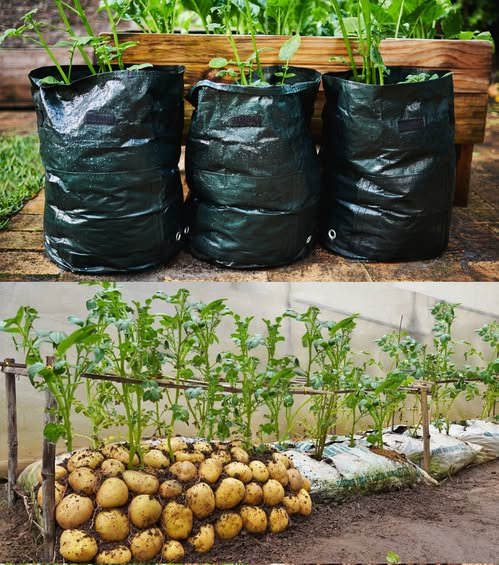
Potatoes are often thought of as a crop that needs large garden beds and deep soil. However, an increasingly popular container method proves that potatoes can thrive—and produce surprisingly large harvests—in something as simple as a single bag of soil. While claims of exact numbers can be misleading, what truly surprises many gardeners is just how productive one well-managed bag can be when the right technique is used.
This article explains the principles behind this bag-growing method, why it works so well, and how home gardeners can use it to grow a generous potato harvest in limited space.
Why Growing Potatoes in a Bag Works
Potatoes grow underground from stems that form tubers when covered with soil. A grow bag creates an ideal environment for this process by offering:
- Loose, well-aerated soil
- Excellent drainage
- Controlled soil depth
- Easy access for harvesting
Unlike compacted garden soil, a bag allows roots and tubers to expand freely. The soil also warms faster, which encourages faster early growth and strong tuber formation.
Choosing the Right Bag
The success of this method starts with the container.
arrow_forward_ios
Read morePause
00:00
00:07
01:31Mute
Powered by
GliaStudios
For best results:
- Use a large grow bag or sack, at least 40–60 liters
- Fabric grow bags are ideal, but thick plastic bags also work
- Ensure several drainage holes at the bottom
Old rice bags, feed sacks, or reused grow bags can all be used, as long as they are clean and sturdy.
Selecting Seed Potatoes
Healthy seed potatoes are essential for good yields.
Choose potatoes that:
- Are firm and disease-free
- Have visible sprouts (“eyes”)
- Are not rotting or shriveled
Large seed potatoes can be cut into pieces, as long as each piece has at least one strong eye. Let cut pieces dry for a day before planting to reduce the risk of rot.
Preparing the Soil
Potatoes need light, fertile soil that drains well.
A simple and effective soil mix includes:
- Garden soil or loam
- Well-rotted compost or aged manure
- Coco peat, leaf mold, or rice husk for looseness
- A small amount of sand or perlite for drainage
Mix thoroughly before filling the bag.
The Layering Method That Makes the Difference
What makes this method so productive is progressive soil layering, sometimes called “hilling in a bag.”
Here’s how it works:
- Fill the bag with 15–20 cm of soil
- Place seed potatoes on top, eyes facing upward
- Cover lightly with soil and water
As the plants grow and stems reach about 15–20 cm tall, add more soil around them, leaving only the top leaves exposed. Repeat this process several times until the bag is nearly full.
Each time you add soil, the buried stems produce more tubers, dramatically increasing the final harvest.
Sunlight and Placement
Potatoes need at least 6 hours of direct sunlight per day. Place the bag in a sunny location such as a balcony, rooftop, patio, or open yard.
Because bags are movable, you can reposition them to follow the sun, which is especially helpful in urban environments.
Watering for Maximum Tuber Formation
Consistent moisture is critical.
- Keep soil evenly moist but not waterlogged
- Water deeply until excess drains out
- Avoid letting the soil dry completely
Uneven watering can result in small or cracked potatoes. Mulching the top with straw or dry leaves helps retain moisture and regulate soil temperature.
Feeding the Plants
Potatoes benefit from gentle, regular feeding.
Recommended feeding:
- Compost or vermicompost every 3–4 weeks
- Liquid compost tea during active growth
- Avoid high-nitrogen fertilizers late in the season
Too much nitrogen leads to leafy growth at the expense of tubers.
When and How to Harvest
One of the biggest advantages of growing potatoes in a bag is easy harvesting.
For new potatoes, you can harvest early—about 10–12 weeks after planting—by gently opening the side of the bag and removing a few tubers.
For a full harvest:
- Wait until the foliage turns yellow and dies back
- Stop watering for 1–2 weeks
- Tip the bag over and collect the potatoes
Harvesting is clean, fast, and doesn’t damage the tubers.
Why Yields Can Be So High
While exact numbers vary, this method can produce far more potatoes than traditional shallow planting because:
- Stems are encouraged to form tubers at multiple levels
- Soil remains loose and oxygen-rich
- Water and nutrients are concentrated where roots need them
- Plants experience less stress
Under good conditions, a single bag can yield dozens of potatoes, which is why many gardeners find the results so impressive.
Common Mistakes to Avoid
- Using bags that are too small
- Skipping the soil-layering steps
- Overwatering or poor drainage
- Planting diseased potatoes
- Harvesting too early
Avoiding these mistakes is often the difference between a modest crop and an exceptional one.
Final Thoughts
Growing potatoes in a bag using the layering method is a simple yet powerful technique that turns a small amount of soil into a highly productive growing space. While claims of exact numbers should be taken lightly, there is no doubt that this method can produce an abundant harvest that surprises even experienced gardeners.
With the right bag, healthy seed potatoes, and patient layering, one bag of soil can yield far more potatoes than most people ever expect—proving that smart methods matter more than garden size.