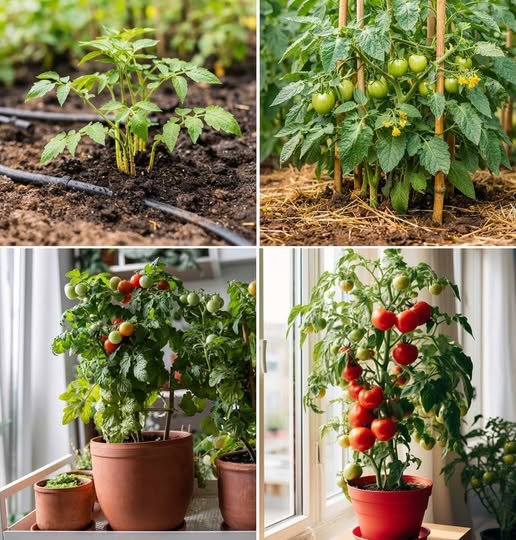
Tomatoes are one of the most commonly used vegetables in kitchens around the world. They’re rich in vitamins A, C, and K, antioxidants like lycopene, and dietary fiber. Growing tomatoes at home is not only simple but also rewarding—both in terms of the abundant harvest and the health benefits they offer. Whether you live in an apartment or have a garden, you can grow tomatoes successfully in containers, grow bags, or directly in the ground.
This article will guide you step-by-step through the process of growing tomatoes at home—from seed to harvest—so you can enjoy fresh, juicy, and chemical-free produce any time of the year.
Why Grow Tomatoes at Home?
There are many reasons to grow tomatoes at home:
- Healthier produce – free from synthetic chemicals and pesticides
- Cost-effective – save money on store-bought tomatoes
- Fresh and flavorful – harvest when ripe for the best taste
- Therapeutic activity – gardening promotes mental well-being
- Compact options – suitable for small spaces using containers or vertical supports
Tomatoes are also versatile and used in salads, sauces, curries, juices, and more, making them an essential addition to any home garden.
Choosing the Right Tomato Variety
There are many tomato varieties to choose from. Consider the following options:
- Cherry tomatoes – small, sweet, and ideal for containers
- Roma (plum) tomatoes – perfect for sauces and pastes
- Beefsteak tomatoes – large and great for slicing
- Determinate varieties – grow to a certain height and fruit all at once (ideal for small spaces)
- Indeterminate varieties – continue to grow and fruit throughout the season (better for larger containers or gardens)
arrow_forward_ios
Watch MorePause
00:00
00:23
04:45Mute
Powered by
GliaStudios
Choose seeds or seedlings based on your climate, space, and intended use.
Materials You’ll Need
- Tomato seeds or seedlings
- Containers or grow bags (at least 12–15 inches deep)
- Potting mix
- Compost or organic fertilizer
- Support structure (stakes, cages, or trellis)
- Mulch
- Watering can
Step-by-Step Guide to Growing Tomatoes at Home
1. Starting from Seeds
- Sow seeds in seed trays or small pots using a fine seed-starting mix
- Plant seeds about ¼ inch deep and keep the soil moist
- Place in a warm, sunny spot or under a grow light
- Seeds germinate in 5–10 days
Once seedlings develop 2–3 sets of true leaves, transplant them into larger containers or directly into the garden.
2. Choosing Containers and Soil
Tomatoes require deep containers for their root systems. Use containers or grow bags that are:
- At least 12–15 inches deep and wide
- Equipped with drainage holes
Prepare a nutrient-rich soil mix:
- 40% garden soil
- 30% compost or aged manure
- 20% cocopeat or sand (for aeration and moisture retention)
- 10% wood ash or neem cake (for added nutrients and pest resistance)
Mix well and fill the containers, leaving 2 inches from the top.
3. Transplanting and Spacing
Gently transplant seedlings into the container, burying the stem slightly deeper to promote root growth. Leave 12–18 inches between plants if planting more than one per container.
Water thoroughly after transplanting.
4. Sunlight and Temperature
Tomatoes require 6–8 hours of full sunlight per day. Place containers in a sunny location—balconies, terraces, or south-facing windows are ideal.
They grow best in temperatures between 20°C–30°C (68°F–86°F). Protect from extreme cold or frost.
5. Watering and Mulching
Water regularly to keep the soil evenly moist but not soggy. In hot weather, daily watering may be required, especially for container-grown plants.
Apply mulch (dry leaves, straw, rice husks) around the base to retain moisture, reduce weeds, and keep the roots cool.
6. Feeding Your Tomato Plants
Tomatoes are heavy feeders. Use organic fertilizers every 2–3 weeks such as:
- Compost tea or vermiwash
- Crushed eggshells (calcium)
- Banana peel tea (potassium)
- Bone meal or fish emulsion (phosphorus)
Avoid excess nitrogen fertilizers, which cause lush leaves but fewer fruits.
7. Supporting the Plants
As tomato plants grow, they need support to keep fruits off the ground. Use:
- Wooden stakes
- Tomato cages
- Trellises
Tie the plant gently with soft ties or cloth strips to prevent stem damage.
8. Pest and Disease Management
Common tomato pests include aphids, whiteflies, and hornworms. Prevent and treat with:
- Neem oil spray every 7–10 days
- Garlic-chili spray
- Soap water for soft-bodied pests
- Companion planting (e.g., basil or marigold nearby to deter pests)
Avoid overhead watering to reduce the risk of fungal diseases.
Harvesting Tomatoes
Tomatoes are ready to harvest when they’re fully colored (red, yellow, or orange depending on the variety), firm, and slightly fragrant. Gently twist or cut the fruit from the vine to avoid damaging the plant.
Frequent harvesting encourages more fruit production.
Final Tips
- Rotate your tomato containers every few days for uniform sunlight exposure
- Pinch off suckers (small shoots between main stem and branches) for better airflow and fruiting
- Remove yellow or diseased leaves regularly
- Store harvested tomatoes at room temperature—not in the fridge—for best flavor
Conclusion
Growing tomatoes at home is easier than it seems. With the right containers, soil, sunlight, and care, you can enjoy a bountiful harvest of fresh, juicy, and nutritious tomatoes. Not only will this enhance your meals, but it will also give you the satisfaction of growing your own food—naturally and affordably.