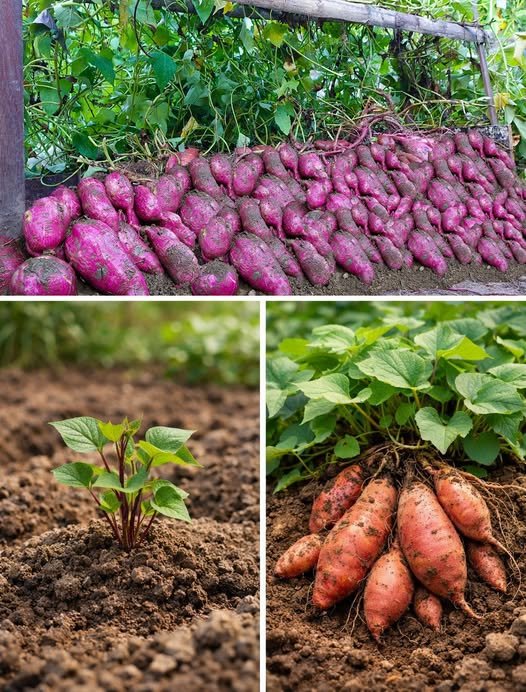
Sweet potatoes are an incredibly nutritious and delicious crop that can be grown year-round with the right techniques. Whether you have a garden, a small backyard, or even just a few containers, you can enjoy a continuous supply of sweet potatoes with minimal effort.
This guide reveals how to successfully grow sweet potatoes throughout the year while achieving generous harvests every season.
Why Grow Sweet Potatoes?
Highly nutritious – Rich in vitamins A and C, fiber, and antioxidants.
Low maintenance – Requires minimal care once established.
Adaptable – Grows well in containers, raised beds, or directly in the ground.
High yield – One plant can produce multiple tubers.
Long storage life – Can be stored for months without refrigeration.
Step-by-Step Guide to Growing Sweet Potatoes Year-Round
Step 1: Choosing the Right Variety
Select high-yielding and fast-growing varieties for best results:
Beauregard – A popular variety known for high yields.
Georgia Jet – Fast-growing with large, sweet tubers.
Jewel – Excellent flavor and good disease resistance.
Purple sweet potatoes – Rich in antioxidants and visually distinctive.
Step 2: Starting Sweet Potato Slips
arrow_forward_ios
Watch MorePause
00:00
00:13
05:09Mute
Powered by
GliaStudios
Sweet potatoes are grown from slips, not seeds.
Choose a healthy sweet potato and partially submerge it in water.
Shoots (slips) will appear in 2–4 weeks.
When slips reach 4–6 inches long, twist them off gently.
Place slips in water until roots form.
Once rooted, slips are ready for planting.
Step 3: Preparing the Soil
Sweet potatoes grow best in loose, well-draining soil.
Ideal soil pH is between 5.5 and 6.5.
Incorporate organic compost or aged manure to enrich nutrients.
Avoid nitrogen-heavy fertilizers, which promote foliage over tuber growth.
Step 4: Planting the Slips
Best planting time is spring and summer, though indoor planting allows year-round growth.
Space plants 12–18 inches apart.
Plant slips 2–3 inches deep, covering roots while keeping leaves exposed.
For containers, use at least a 10-gallon pot per plant.
Step 5: Caring for Sweet Potatoes
Sunlight – Provide 6–8 hours of direct sunlight daily.
Watering –
Keep soil moist but not waterlogged.
Reduce watering two weeks before harvest to improve storage quality.
Mulching –
Apply straw or wood chips to retain moisture and suppress weeds.
Natural fertilization –
Banana peel compost for potassium to support tuber development.
Crushed eggshells and coffee grounds to supply calcium and nitrogen.
Wood ash in small amounts to add phosphorus for root growth.
Step 6: Extending Growth for Year-Round Harvests
Practice successive planting by starting new slips every 2–3 months.
Grow indoors during winter using large containers or controlled environments.
Use greenhouses or cold frames to protect plants from frost.
Save healthy tubers from harvest and replant them for the next growing cycle.
Common Problems and Solutions
Small or misshapen tubers
Cause: Poor soil aeration or overcrowding.
Solution: Use loose soil and proper spacing.
Yellowing leaves
Cause: Overwatering or nutrient imbalance.
Solution: Reduce watering and amend soil with compost.
Pests such as weevils or aphids
Cause: Insects feeding on foliage or roots.
Solution: Apply neem oil or diatomaceous earth as natural pest control.
Harvesting and Storing Sweet Potatoes
Sweet potatoes are ready to harvest in 90–120 days.
Dig carefully using a garden fork to avoid damaging tubers.
Cure harvested sweet potatoes in a warm, humid area for 10–14 days to enhance sweetness.
Store in a cool, dry place for long-term use.
Conclusion
Growing sweet potatoes year-round is both simple and rewarding when the right techniques are used. By focusing on proper slip propagation, soil preparation, and natural care methods, you can enjoy large harvests with minimal effort.
With consistent practice, this approach provides a steady supply of nutritious, homegrown sweet potatoes straight from your garden or containers.