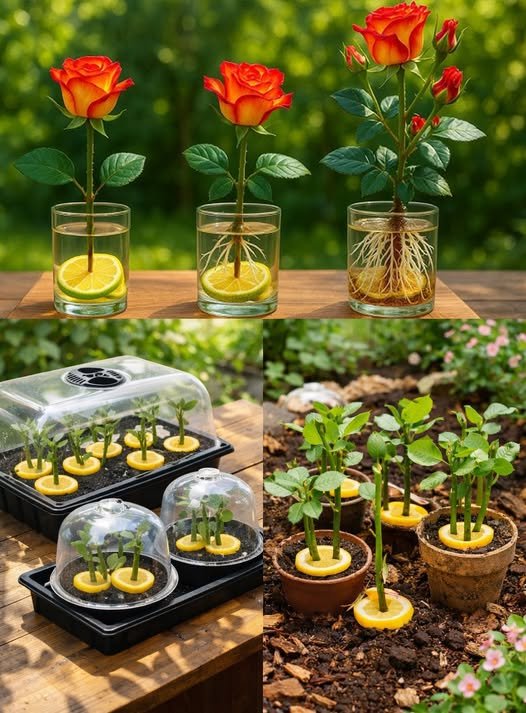
Roses are one of the most cherished flowers in the world, admired for their beauty, fragrance, and symbolism. But for many gardeners, propagating roses from cuttings can be tricky. Fortunately, nature provides a surprisingly simple and effective solution: lemon slices.
Yes, those same lemons you use in the kitchen can be used in the garden to stimulate rose cuttings to sprout and root more successfully. Lemons are rich in natural acids, vitamins, and antibacterial compounds, all of which can help rose cuttings survive, form roots faster, and grow into healthy plants. This method is simple, budget-friendly, and chemical-free—perfect for any home gardener.
Why Use Lemon Slices for Rose Propagation?
Lemons contain citric acid, vitamin C, and essential nutrients that can create the right environment for root development in plant cuttings. Here’s how they help:
Natural rooting stimulant: The acidity in lemon helps mimic the pH levels of many commercial rooting agents, encouraging the formation of new roots.
Antibacterial properties: Lemons naturally kill bacteria and fungi that may cause cutting rot or infection.
Moisture retention: Lemon pulp helps keep the base of the cutting hydrated during the initial rooting phase.
Completely natural and chemical-free: Ideal for gardeners seeking organic solutions.
Using lemon slices is not only effective but also environmentally friendly and readily accessible.
Materials You’ll Need
Healthy rose cuttings (6–8 inches long, with a few leaf nodes)
1 fresh lemon
A clean, sharp knife or garden shears
A small planting pot with well-draining soil or a glass of water
Optional: clear plastic bag to create a mini greenhouse
Step-by-Step Guide: Propagating Roses Using Lemon Slices
1. Prepare the Rose Cuttings
Start by selecting healthy stems from an existing rose bush. Choose stems that are neither too green nor too woody—semi-hardwood is ideal.
Use sharp, sterilized garden shears to cut a 6–8 inch section from the stem, just below a node (the bump where a leaf emerges). Remove the lower leaves and any flowers or buds to conserve energy for rooting. Leave just a couple of small leaves at the top.
2. Slice the Lemon
Cut a fresh lemon into 4–6 thick slices. Each slice will act as a base and natural rooting medium for your rose cuttings. Use organic lemons if possible to avoid chemical residues.
Make a small hole in the center of each slice using a pencil or your finger—just wide enough to insert a rose cutting without damaging it.
3. Insert Cuttings into Lemon Slices
Gently insert the bottom end of each rose cutting into the hole you made in the lemon slice. The lemon slice will cradle the cutting and provide both nutrients and moisture during the early rooting phase.
This works well because the acidic environment encourages rooting and helps reduce fungal problems that often plague rose cuttings.
4. Plant the Cutting
You now have two options:
Option A: Soil Method
Plant the lemon slice (with the cutting inserted) directly into a pot filled with moist, well-draining potting mix. Bury the lemon about 1 inch deep so it sits beneath the soil surface. Firm the soil gently around it.
Option B: Water Method
Place the lemon slice with the cutting into a shallow glass of clean water, ensuring the stem is submerged but the lemon slice floats at the surface. Change the water every 2–3 days to prevent mold or stagnation.
5. Provide Ideal Conditions
Place the cutting in a warm, bright area with indirect sunlight. Avoid direct exposure to sun, which can dry out the cutting or overheat the lemon.
To maintain humidity, you can cover the pot or glass with a clear plastic bag. This creates a mini greenhouse effect, which speeds up the rooting process.
6. Wait and Watch
Within 10 to 14 days, you should begin to notice the first signs of root development. In the soil method, new leaf growth is a good sign that roots are forming. If you’re using the water method, look for white root tips appearing near the submerged nodes.
Once roots are at least an inch long, you can transplant the cutting to a larger pot or directly into your garden.
Tips for Success
Use fresh lemons—older slices may lose their acidity and moisture.
Avoid overwatering if using soil. The lemon already holds some moisture.
Sterilize your tools before making cuts to reduce disease risk.
Be patient—rooting can take up to three weeks depending on climate and rose variety.
Final Thoughts
Using lemon slices to propagate roses is a fantastic low-cost, chemical-free technique that works surprisingly well. The natural acids and nutrients in lemons not only stimulate root growth but also protect the cutting during its most vulnerable stage.
If you’ve struggled with rose propagation in the past, give this method a try. With just a few lemons and some basic garden tools, you may soon find yourself with a flourishing collection of beautiful rose plants.