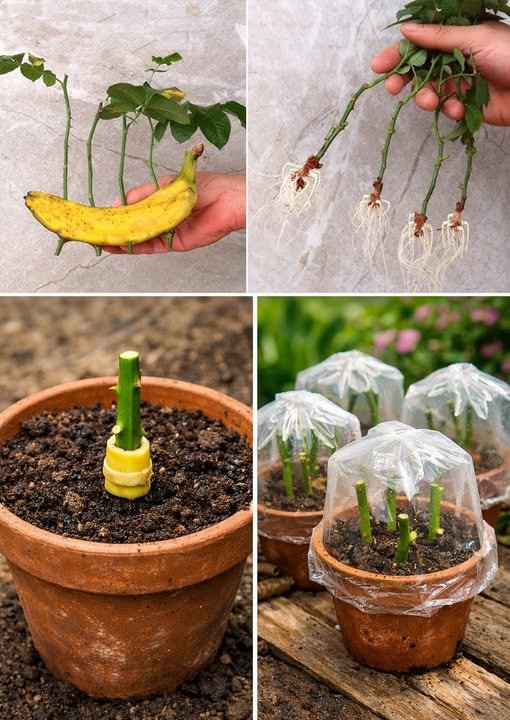
Propagating roses can be a rewarding endeavor for gardeners, and an unconventional yet effective method involves using bananas. Bananas are rich in nutrients and natural growth hormones that can stimulate root development in rose cuttings. Here’s a comprehensive guide to propagating roses using bananas.
Why Use Bananas for Rose Propagation?
Bananas contain essential nutrients like potassium, phosphorus, and natural growth hormones such as auxins, which promote root development. These components create an ideal environment for rose cuttings to establish roots efficiently.
Materials Needed
- Healthy rose cuttings (6–8 inches long)
- Ripe banana or banana peel
- Sharp knife or pruning shears
- Potting soil or garden soil
- Planting pots or garden bed
- Clear plastic bag or plastic wrap (to create a mini greenhouse)
- Watering can
Step-by-Step Guide
1. Select and Prepare Rose Cuttings
Choose healthy stems from a mature rose bush. Cut 6–8 inch sections just below a leaf node using clean, sharp pruning shears. Remove all leaves and flowers from the lower half of the cutting to focus the plant’s energy on root development.
2. Prepare the Banana
There are several ways to utilize bananas for rose propagation:
- Banana Peel Wrap: Cut a fresh banana peel into small strips. Wrap a strip around the base of the rose cutting, ensuring the inner side of the peel contacts the stem. Secure it gently with twine or a biodegradable tie.
- Banana Paste: Mash a ripe banana into a paste. Dip the cut end of the rose cutting into the paste, coating it thoroughly.
3. Plant the Cutting
arrow_forward_ios
Read morePause
00:00
00:00
01:31Mute
Powered by
GliaStudios
Fill a pot or prepare a spot in your garden with well-draining soil. Make a hole in the soil and insert the rose cutting, ensuring the banana-treated end is buried. Firm the soil around the cutting to secure it in place.
4. Create a Mini Greenhouse
To maintain humidity and protect the cutting, cover it with a clear plastic bag or plastic wrap. This creates a greenhouse effect, retaining moisture and warmth.
5. Water and Care
Water the soil lightly to keep it moist but not soggy. Place the setup in a location with indirect sunlight. Monitor the soil moisture regularly, watering as needed to maintain consistent moisture levels.
Monitoring Progress
Over the next few weeks, check for signs of new growth, indicating successful rooting. Gently tug on the cutting after a few weeks; resistance suggests root development. Once established, remove the plastic cover and continue to care for the new rose plant as usual.
Tips for Success
-
- Banana Selection: Use ripe bananas or fresh peels to ensure optimal nutrient availability.
- Cutting Quality: Healthy, disease-free cuttings increase the chances of successful propagation.
- Soil Conditions: Ensure the soil is well-draining to prevent waterlogging, which can cause rot.
- Climate Considerations: In cooler climates, consider starting the propagation indoors or in a greenhouse to maintain consistent temperatures.
Conclusion
Using bananas to propagate roses is a simple, cost-effective, and eco-friendly method that leverages the fruit’s natural nutrients and growth hormones to stimulate root development. With patience and proper care, this technique can yield healthy new rose plants, adding beauty to your garden.