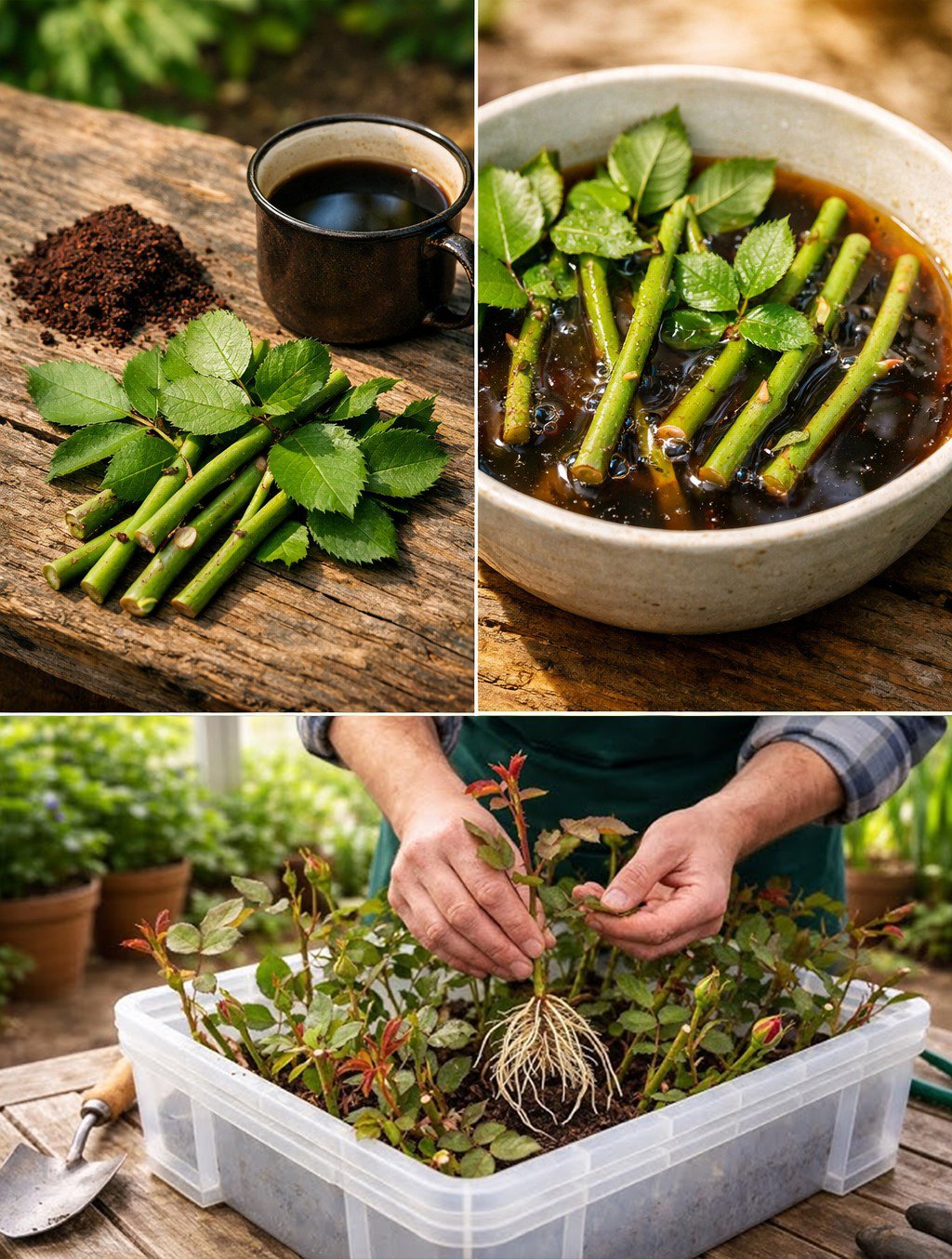
Roses are among the most cherished flowers in the world. Known for their beauty and fragrance, they can be found in gardens and parks across nearly every continent. While many gardeners are familiar with traditional propagation methods—such as cuttings in water or rooting hormone powder—there’s an alternative, natural method that may surprise you: using coffee.
Yes, ordinary coffee, a staple in many households, can play a vital role in helping you propagate roses successfully. In this article, we’ll walk through a step-by-step guide on how to use just 100 grams of coffee to encourage the healthy growth of rose cuttings. This method is simple, effective, and ideal for those who prefer organic gardening solutions.
Why Use Coffee for Rose Propagation?
Coffee is rich in nutrients that plants love. Used coffee grounds and brewed coffee contain essential minerals such as nitrogen, potassium, and phosphorus. These components support root development and soil health. When applied correctly, coffee can provide the right conditions to stimulate root growth in rose cuttings.
However, it’s important to note that coffee should be used in moderation. Its acidity and caffeine content, if overused, can harm plants. In this method, only a controlled amount (100 grams) is used, ensuring it benefits rather than overwhelms the cutting.
Materials You’ll Need
To try this method, gather the following:
- Fresh rose cuttings (semi-hardwood stems are ideal)
- 100 grams of ground coffee (preferably used coffee grounds, but freshly ground coffee can also work)
- Clean water
- A small bucket or container
- A planting pot with well-draining soil
- A plastic bag or transparent cover (to create a greenhouse effect)
Step-by-Step Instructions
Step 1: Select the Right Cutting
Choose a healthy rose stem from a mature plant. Ideally, the cutting should be about 15–20 cm long with a few leaves on the top and no flowers or buds. Using clean, sharp pruning shears, cut the stem at a 45-degree angle just below a leaf node.
Step 2: Prepare the Coffee Solution
In a container, mix 100 grams of coffee with about one liter of water. Let the mixture sit for an hour to infuse. This will produce a mild coffee solution rich in nutrients, without being too strong for the plant cutting.
Step 3: Soak the Cutting
Place the rose cutting into the coffee solution. Let it soak for 30 minutes to an hour. This allows the nutrients to be absorbed into the stem and helps to naturally disinfect the cutting.
Step 4: Plant the Cutting
After soaking, plant the cutting into a pot filled with well-draining soil. Press the soil firmly around the stem to hold it in place. Water the soil lightly.
Step 5: Create a Humid Environment
To promote root development, it’s helpful to maintain a humid atmosphere around the cutting. Cover the pot with a clear plastic bag or use a plastic bottle with the bottom cut off. This will act as a mini greenhouse, trapping moisture and warmth.
Step 6: Wait and Observe
Place the pot in a warm, well-lit location but out of direct sunlight. Keep the soil moist but not soggy. In about two to four weeks, the cutting should start forming roots. You can check by gently tugging on the stem—if you feel resistance, roots have begun to form.
Caring for Your New Rose Plant
Once your cutting has rooted successfully, you can gradually remove the plastic cover. Allow the plant to acclimate to its new environment over a few days. Continue to water regularly and eventually transplant the rose into your garden or a larger pot.
This method not only provides a creative way to recycle coffee but also supports natural gardening practices by avoiding chemical rooting agents.
Final Thoughts
Propagating roses with coffee is a cost-effective and environmentally friendly technique that’s accessible to gardeners of all experience levels. With just a small amount of coffee and a bit of patience, you can grow new rose plants to expand your garden or share with friends and neighbors.